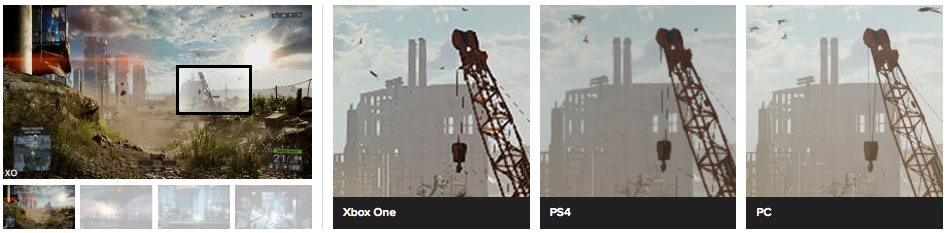
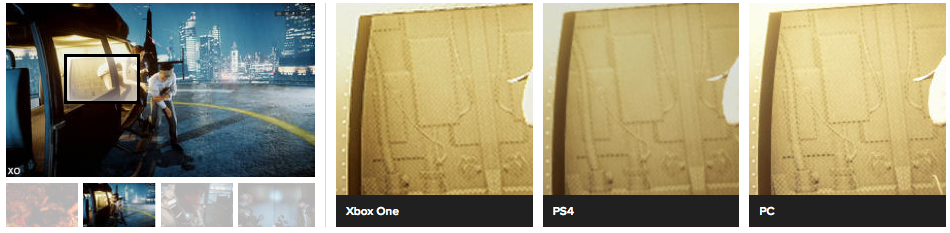
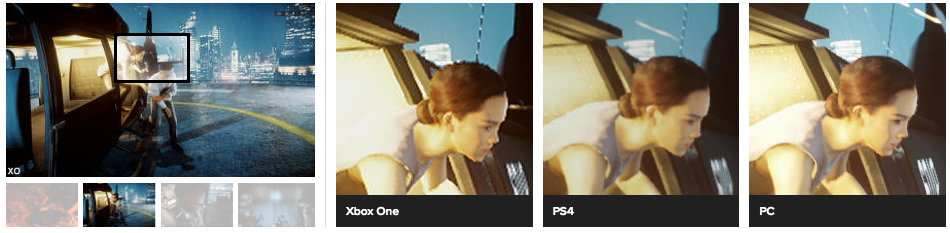
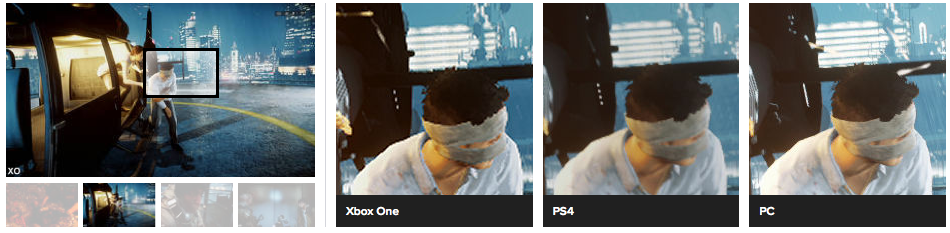
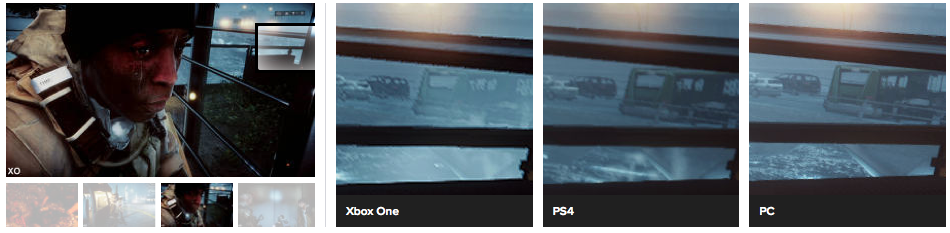
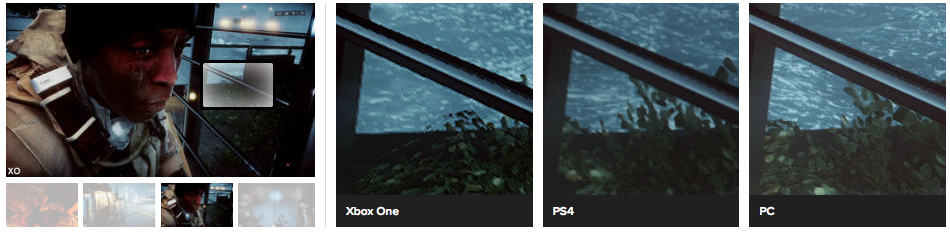
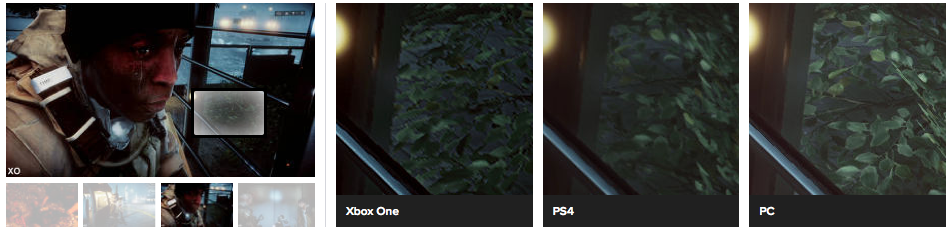
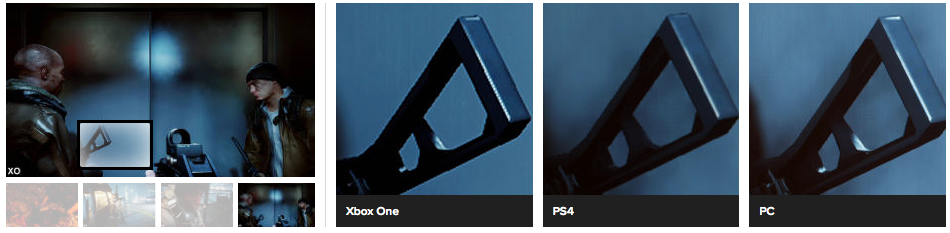
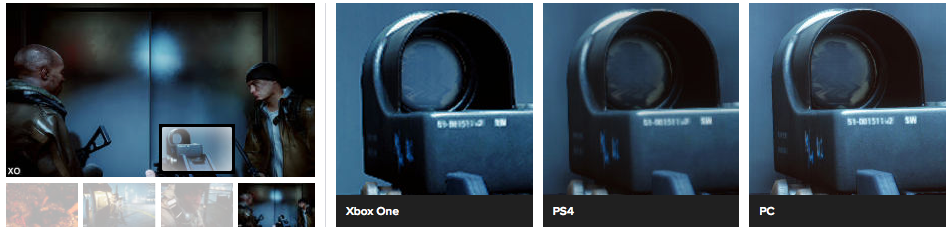
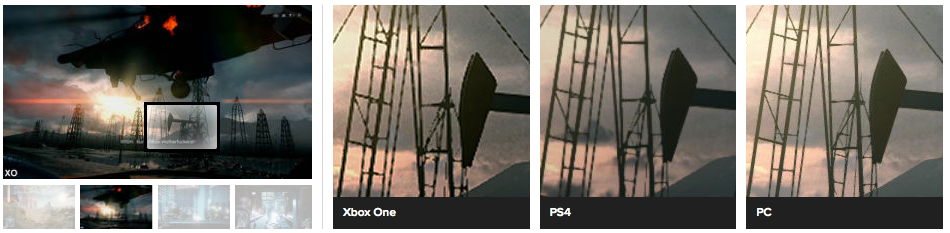
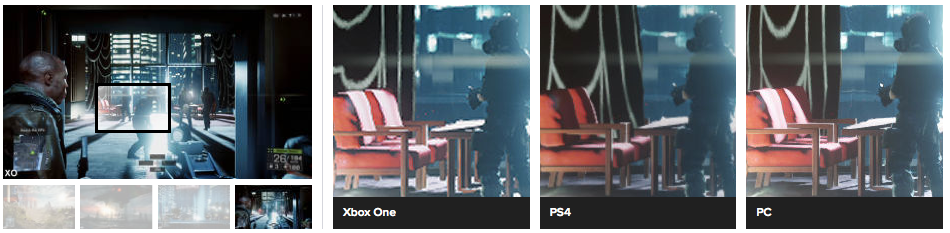
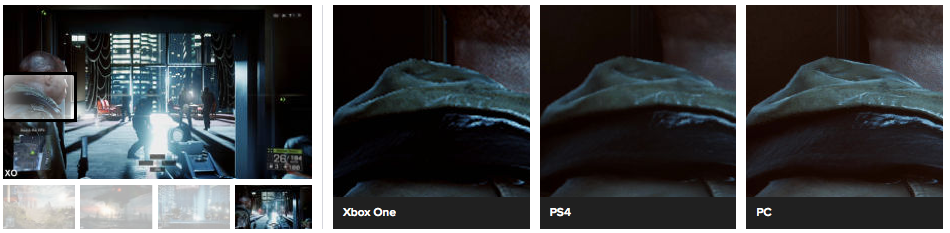
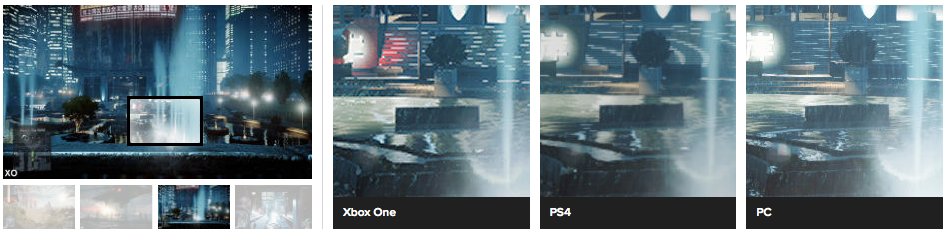
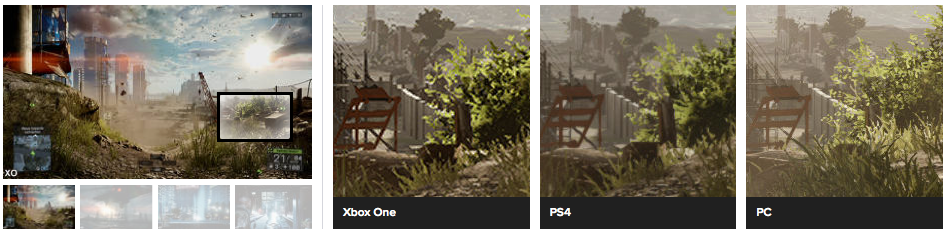
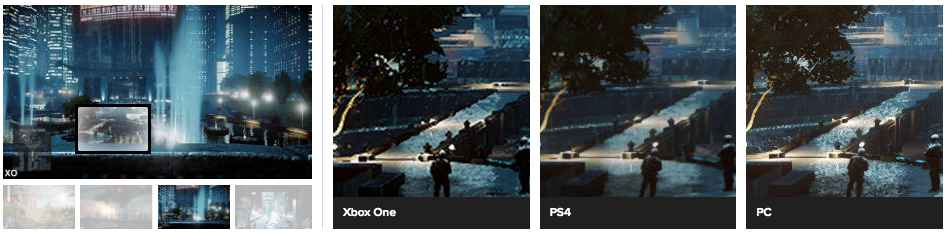
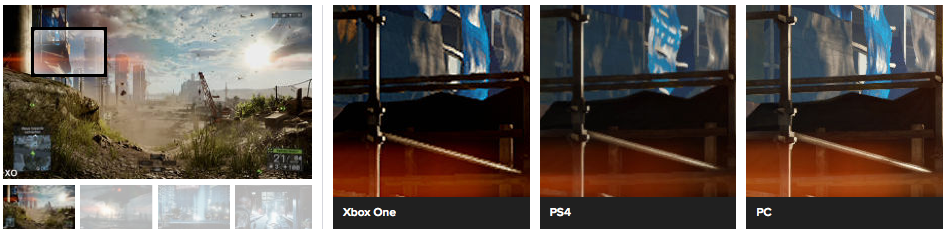
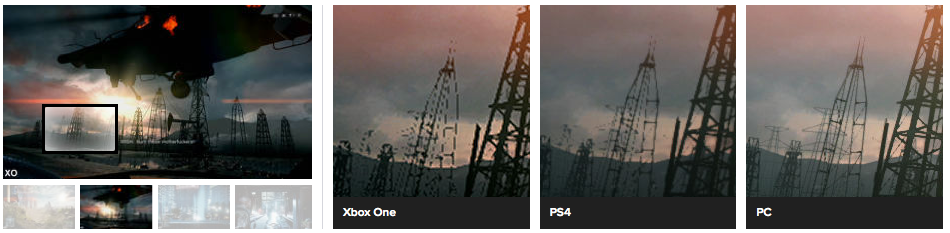
Needless to say, there are some basic differences in image quality that need knocking on the head right away. Chief among them is the hot topic of internal resolution, where we determine that the Xbox One code is indeed running at 1280x720. If this is set in stone for release - as is likely - the Microsoft version is poised to give us the most aliasing of the two next-gen platforms by a noticeable degree, and is only a stone's throw from the sub-720p resolutions of current-gen releases. On the other hand, the PS4 version delivers a whopping 1600x900 resolution in all modes, giving it a 50 per cent lead in output pixels overall. As well as cutting down on jagged edges, this reduces the amount of pixel shimmer we see in motion on complex shaders or thin geometry, with distant power lines, scaffolding and other elements with sub-pixel elements creating unwanted flickering on Xbox One.
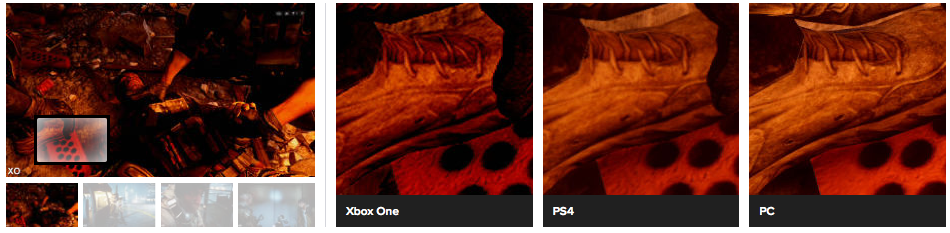
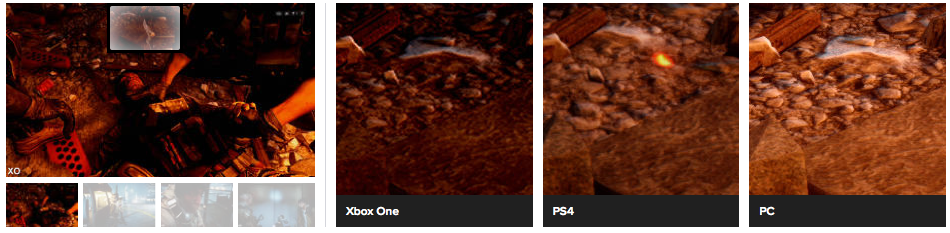
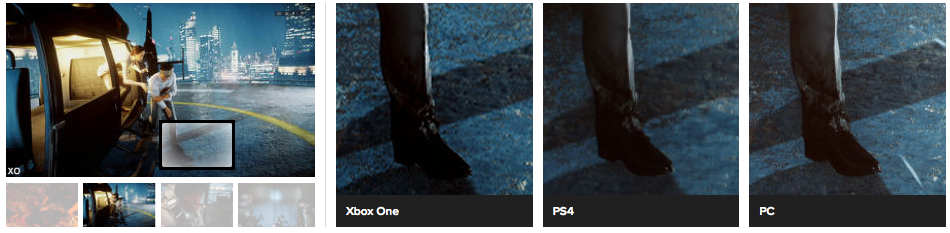
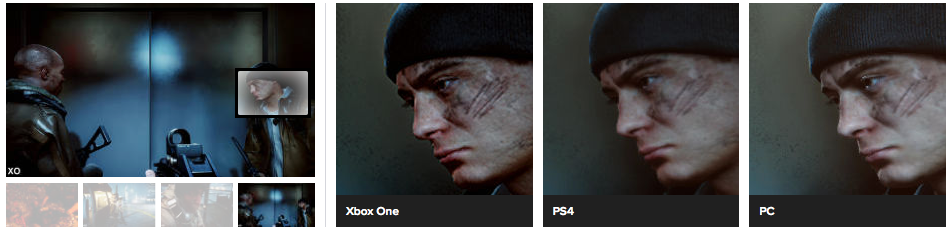
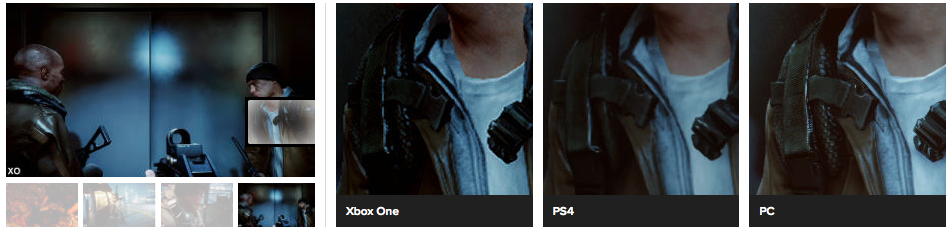
But the differences we saw don't just stop at resolution. Both versions are treated to post-processing anti-aliasing too, seemingly equivalent to the refined, high setting on PC. However, this doesn't tell the whole story. As you may notice in our screengrabs, the actual results on PS4 lack the corresponding level of crystal clarity we'd expect of such a significant resolution boost. This should surely be a home run for Sony's console, but what is likely to be a software-based upscale to 1080p delivers less-than-stellar returns, and for better or worse leaves the Xbox One with an often crisper looking, albeit much more aliased image.
What is curious is the level of "pop" given to the Xbox One's textures, where - bizarrely - artwork often seems to be more detailed than on PlayStation 4. In high contrast scenes, we sometimes see a kind of halo effect around some detail, which may suggest some kind of artificial detail-boosting post-process. Whether this is part of Microsoft's new upscaling tech remains to be seen, but we were reminded of the Medal of Honor effect seen in the Darbee Darblet review. However, what is added to texture detail also seems to be applied to XO's most ugly element - its highly noticeable sub-pixel break-up.
Regardless, the overall impression is that the gap is closed just a touch between the Microsoft and Sony platforms. The soft blur on PS4 comes across as a missed opportunity given the extra leg-work needed by the PS4's troves of GDDR5 RAM and GPU compute units to hit this 1600x900 mark. Nevertheless the image in motion is clearly the superior of the two - if not quite the knock-out smash we'd expected based on the raw metrics. As the template for what could be achieved with zero upscaling, the PC version highlights the benefits of running at a full 1920x1080 and the 4x MSAA provides the icing on the cake in terms of image quality. Where marking out enemies on the horizon is concerned, the heightened pixel count on an unfiltered, multi-sampled image makes for a tangible, desirable difference.
This leads us to a second issue that affects both console releases: gamma levels. We went into the review event having never hooked up our equipment to either next-gen platform before, and our tests with BF4 gave some curious results we want to revisit with the final game on retail hardware. Similar to the Xbox 360, Microsoft's new platform seems to enforce a colour push towards the lower end, leaving us with more saturated colours and deeper blacks. It's just cause to head towards Battlefield 4's brightness settings, but in the interest of a fair test we kept this at the default 30 per cent for all platforms.